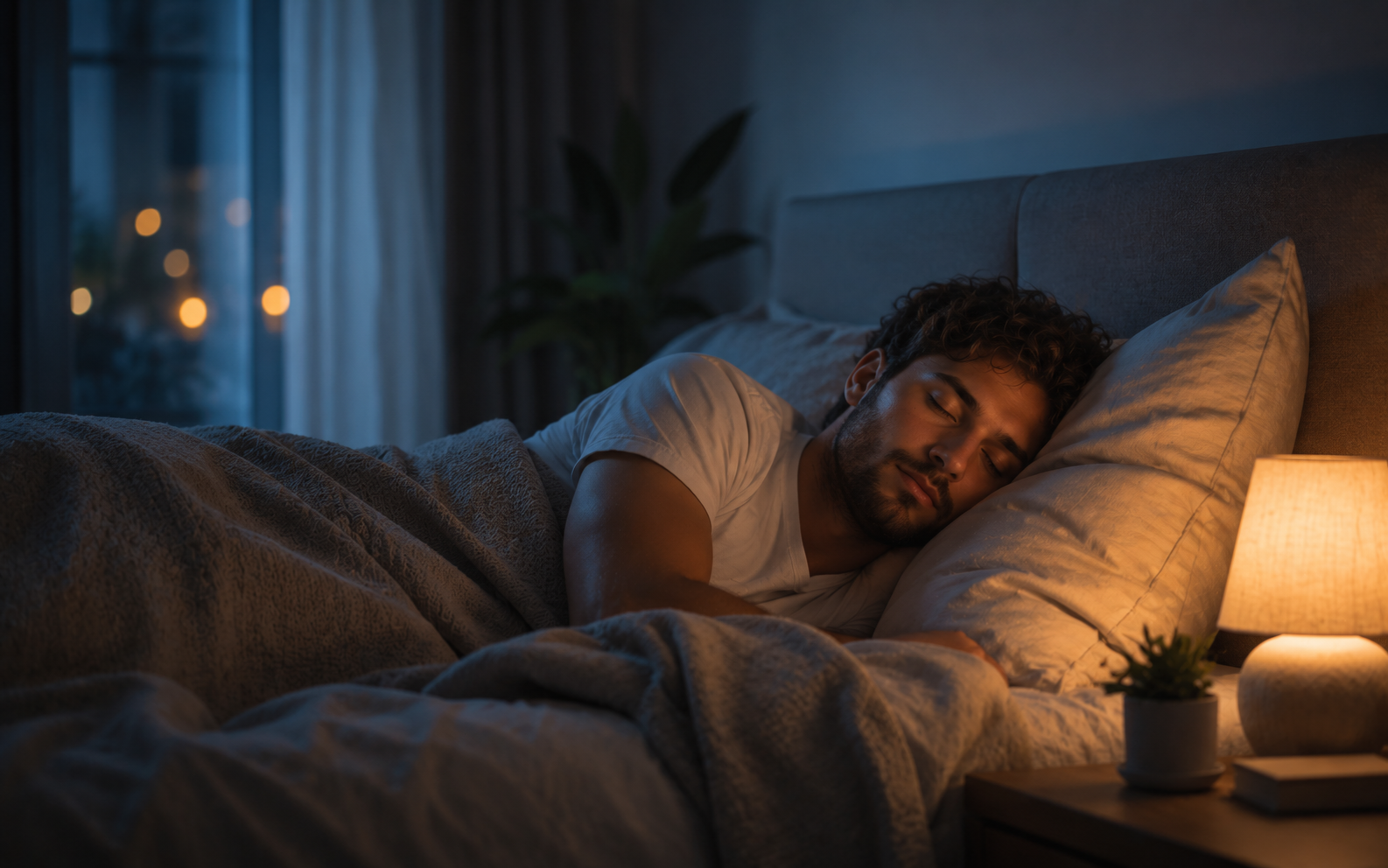
There is a reason that "sleep on it" has been wisdom for generations. Sleep is not a passive state of rest. It's when your brain consolidates memories, processes emotions, repairs cells, regulates hormones, and does the essential maintenance work that no other state allows. Take away quality sleep, and everything — mood, concentration, resilience, creativity, physical health — begins to deteriorate.
For those navigating anxiety, depression, or emotional burnout, the relationship with sleep is often complicated. Anxiety makes it harder to fall asleep; poor sleep worsens anxiety. Depression leads to excessive sleep; oversleeping deepens depression. Understanding this bidirectional relationship is the first step to breaking the cycle.
The Sleep-Mental Health Connection
During sleep — specifically during the REM (rapid eye movement) stage — your brain processes emotional memories and strips them of their affective charge. This is why a problem that felt overwhelming at midnight can feel more manageable in the morning. REM sleep is literally a form of overnight emotional therapy.
When sleep is chronically disrupted, this emotional processing fails to occur. Unprocessed emotional experiences accumulate, making you more reactive, more easily overwhelmed, and less resilient to stress. Research from UC Berkeley found that sleep-deprived people showed 60% more amygdala reactivity to negative stimuli — their brains essentially lost the ability to rationally regulate emotional responses.
"Sleep is the single most effective thing you can do to reset your brain and body for emotional health." — Matthew Walker, neuroscientist
Creating a Sleep Sanctuary
Your bedroom environment has a profound impact on both sleep onset and sleep quality. Three conditions matter most:
Temperature: Your core body temperature needs to drop by 1-2°C to initiate sleep. An environment of approximately 18-19°C is optimal for most people. If your room is too warm, sleep will be lighter, more fragmented, and less restorative.
Darkness: Even small amounts of light exposure during sleep — from a streetlight, a phone charger, or a TV standby light — suppress melatonin production and reduce sleep quality. Blackout curtains and removing or covering all light sources in your bedroom make a measurable difference.
Quiet: If ambient noise is unavoidable, consistent background noise (white noise, pink noise, or soft nature sounds) is more conducive to sleep than unpredictable sounds. The brain's threat-detection system responds to changes in sound rather than sound itself — consistent background noise essentially gives it nothing to flag as potential danger.
The Power of a Consistent Schedule
Your circadian rhythm — the internal 24-hour biological clock regulating sleep, waking, hormone release, digestion, and dozens of other processes — operates best with consistency. Going to bed and waking at roughly the same times every day, including weekends, is more important for sleep quality than any supplement, technique, or mattress upgrade.
Irregular sleep schedules create what sleep researchers call "social jet lag" — a perpetual state of mild sleep deprivation similar to constantly crossing time zones. Even a 90-minute difference between weekday and weekend wake times has been shown to impair cognitive function and mood regulation during the following week.
The Screen Paradox
Smartphones and screens are perhaps the most significant modern threat to sleep quality. They work against sleep in two distinct ways:
First, blue light emitted by screens suppresses melatonin — the hormone that signals nightfall to your body and induces sleepiness — for up to 3 hours after exposure. Using screens in bed or for the hour before bed tells your brain, hormonally, that it is still daytime.
Second, and more importantly, the content consumed on screens — social media, news, messages — engages your threat-detection system and your emotional processing networks in ways that are incompatible with the neurological transition to sleep. You cannot fall asleep while your brain is actively evaluating social threats or processing distressing information.
Commit to a genuine screen-free period of at least 45 minutes before sleep. Not scrolling in low light with Night Mode enabled — truly off, in another room.
An Evening Wind-Down Ritual
The bridge between the busyness of the day and the stillness of sleep is best crossed through a consistent, calming ritual. This doesn't need to be elaborate — 20-30 minutes of predictable, gentle activity that your nervous system learns to associate with the approach of rest.
This might include: a warm bath or shower, followed by gentle stretching, followed by reading a physical book (not a screen) by soft light. Or: journaling the day's highlights and letting go of its tensions, followed by a brief body-scan meditation. The specific activities matter less than their consistency — the ritual itself becomes a physiological signal that sleep is coming.
Quieting an Anxious Mind at Bedtime
The most common sleep complaint among those with anxiety is a mind that "won't switch off" at bedtime. The brain — trained all day to be alert, productive, and reactive — doesn't automatically shift into rest mode when you lie down.
Two practices are particularly effective. The first is the "brain dump" journal mentioned earlier — writing everything in your head onto paper before getting into bed. The second is the 4-7-8 breathing technique: inhale for 4 counts, hold for 7, exhale for 8. This reliably activates the parasympathetic nervous system and can significantly reduce the time to sleep onset.
If you wake during the night with an anxious mind, avoid lying in bed struggling. After 20 minutes of wakefulness, get up, go to another room, do something calm and unstimulating (reading, gentle stretching) until you feel genuinely sleepy, then return to bed. This maintains the association between your bed and sleep, rather than between your bed and anxiety.
Sleep Is a Practice, Not a Performance
One of the paradoxes of sleep difficulties is that trying too hard to sleep makes it worse. Sleep anxiety — the anxious monitoring of whether you're falling asleep — is itself incompatible with sleep. The goal is to create the right conditions, follow your ritual, and then release the outcome.
If you have a difficult night, the most important thing is to wake at your usual time regardless. Sleeping in after a bad night feels intuitively right but disrupts your circadian rhythm, making the next night harder. Consistency, patience, and gentleness toward yourself are the conditions under which sleep — like healing — gradually improves.